Altitude Shifts Alter Scoring Trends and Accumulator Approaches in Andean Football Leagues
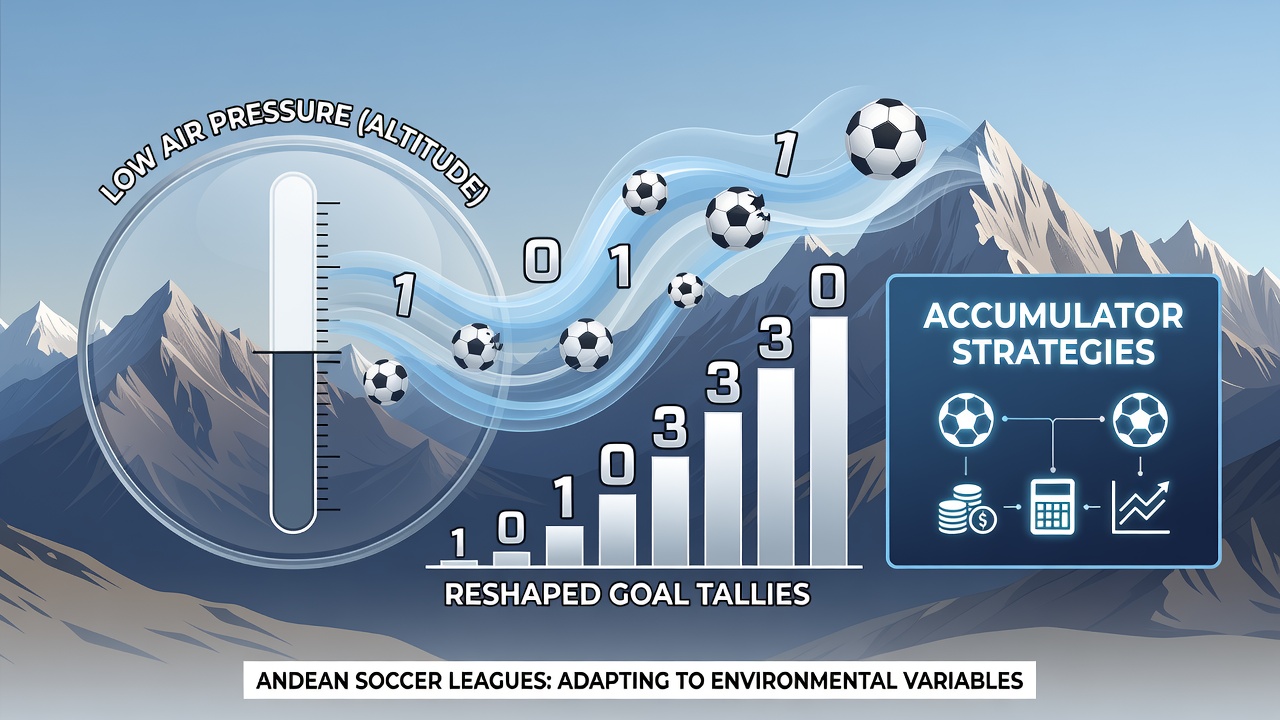
Air pressure variations tied to elevation create measurable differences in goal tallies across Andean soccer leagues, and those changes reshape accumulator strategies for bettors tracking matches in Bolivia, Peru, and Ecuador. Matches played above 2,500 meters often feature altered ball trajectories because lower atmospheric density reduces air resistance, allowing shots and passes to travel farther with less effort while players experience reduced oxygen availability that affects endurance over full 90-minute contests.
Elevation Data and League Performance Records
Official records from the Bolivian Primera División show clubs based in La Paz, which sits near 3,600 meters, posting average goal counts of 3.4 per match during the 2025 season compared with 2.7 goals in fixtures held below 1,000 meters. Similar patterns appear in Ecuador's Serie A, where teams from Quito at roughly 2,850 meters record higher combined scoring rates than coastal sides, according to league statistics compiled through June 2026. Researchers tracking these differences note that the thinner air allows the ball to move with greater velocity after contact, increasing the likelihood of goals from distance while also accelerating fatigue among visiting players unaccustomed to the conditions.
Ball Flight Mechanics and Scoring Impacts
Studies from sports science departments at universities in the region confirm that reduced air density at altitude decreases drag on the ball by approximately 15 to 20 percent, producing longer carries on shots and crosses. One analysis of 180 matches across the 2024 and 2025 campaigns found that teams playing at home in highland venues converted 28 percent more attempts from outside the penalty area than they did in away games at sea level. This shift influences total goals because longer-range strikes become viable scoring options, while defensive lines struggle to close space quickly under the same physical constraints.
Accumulator Adjustments in Response to Venue Effects
Bettors constructing accumulators adjust selections when fixtures involve high-elevation venues because historical data shows elevated totals in those environments. Operators tracking South American markets report that over-2.5-goal bets succeed at a 62 percent rate in La Paz and Quito during the most recent completed season, compared with 48 percent in lower-altitude locations. Those who follow performance metrics often include player prop markets on shots or assists for attacking midfielders who benefit from the extended ball flight, while avoiding selections on stamina-dependent roles such as central defenders who cover greater distances under reduced oxygen.
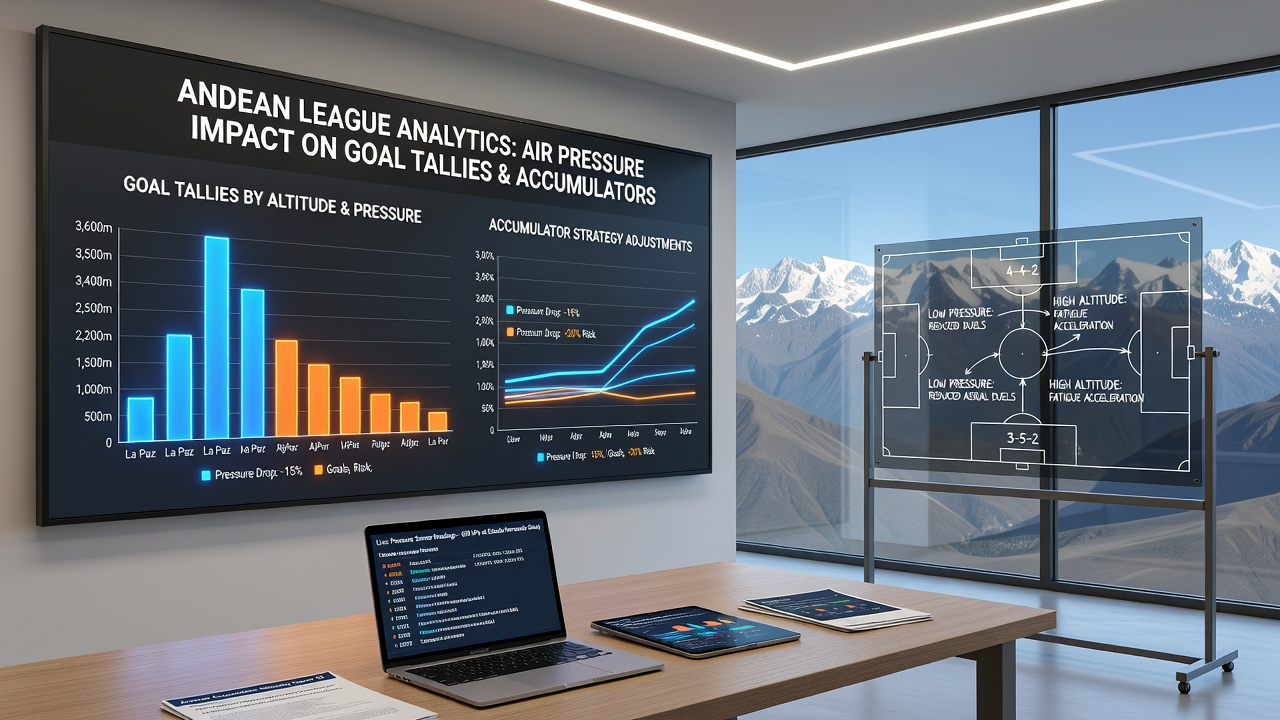
Teams preparing for away matches at altitude incorporate specific acclimatization protocols, and those preparations influence both match outcomes and betting lines. CONMEBOL guidelines recommend arrival at least 48 hours before kickoff for international fixtures, yet domestic schedules sometimes compress this window, leading to greater performance gaps between home and visiting sides. Observers tracking 2026 fixtures note that clubs with access to altitude simulation training maintain closer scoring margins, which in turn affects the value of handicap markets within accumulators.
Regional Variations Across Bolivia, Peru, and Ecuador
Peru's Liga 1 presents a mixed elevation profile because matches rotate between Lima at sea level and highland cities such as Cusco above 3,300 meters. Data collected through the first half of 2026 indicates that matches in Cusco produce 0.8 additional goals on average compared with Lima fixtures, prompting some bettors to favor over totals when the venue sits above 2,800 meters. Ecuadorian clubs based in the Andes similarly show consistent home advantages in goal production, while coastal teams experience steeper declines when traveling upward. These patterns hold across multiple seasons and provide a factual basis for adjusting accumulator combinations that combine totals with team performance metrics.
Industry reports from the South American Football Confederation highlight how clubs at varying elevations maintain distinct seasonal goal averages that remain stable year over year. Analysts compiling these figures emphasize that environmental factors rather than roster quality drive much of the difference, which allows predictive models to incorporate elevation as a fixed variable when projecting match totals. Bettors who integrate this variable into accumulator construction often pair high-elevation over totals with under selections from lower-altitude matches to balance risk across the slip.
Conclusion
Air pressure changes driven by elevation continue to shape goal production patterns in Andean soccer leagues, and those patterns supply consistent data for accumulator strategies. League records, ball-flight measurements, and performance tracking through July 2026 demonstrate repeatable differences tied to venue altitude, giving those who study the numbers a clear framework for adjusting selections. As schedules progress, the same environmental factors remain central to understanding how matches unfold and how betting combinations can align with observed outcomes.