Boundary Dimensions Influencing Run Accumulation Trends in T20 Cricket at Iconic Global Venues
Casey Krüger · Aug 26, 2026
Boundary Dimensions Influencing Run Accumulation Trends in T20 Cricket at Iconic Global Venues
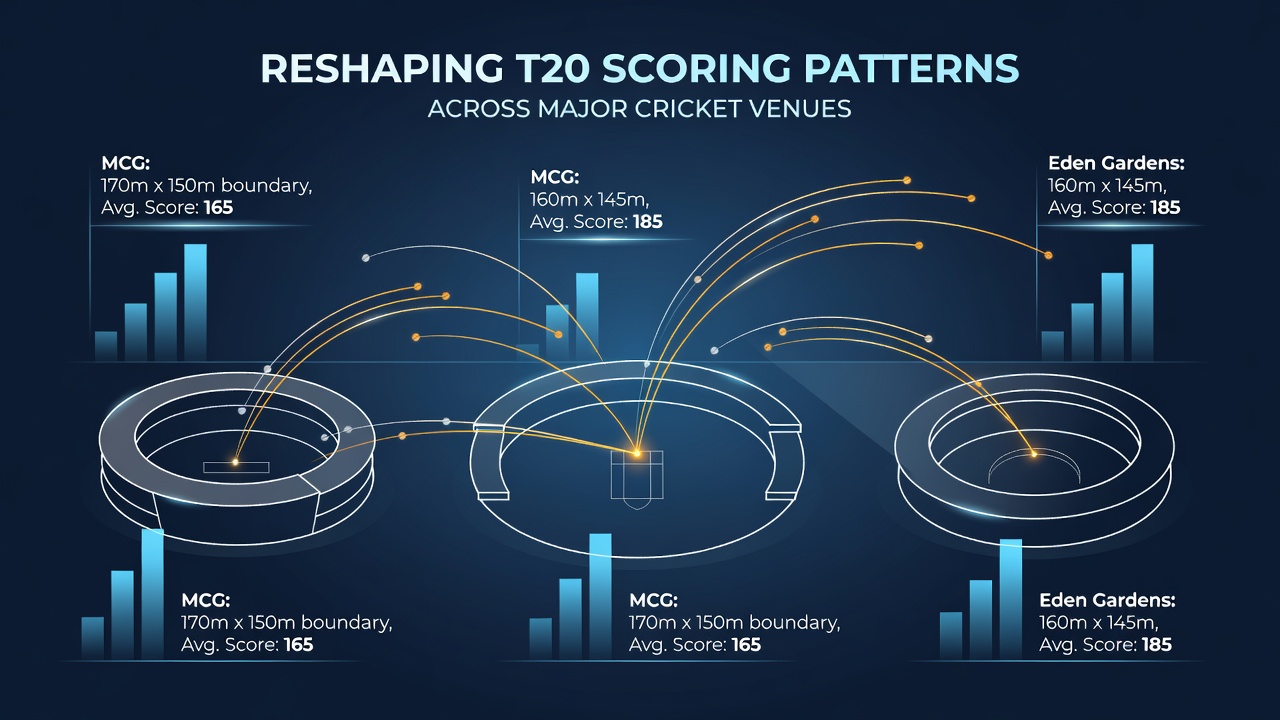
Ground dimensions play a central role in determining how runs accumulate during T20 matches, with shorter boundaries encouraging aggressive shot selection while larger perimeters demand more precise placement and power hitting. Data from recent international fixtures shows that venues with straight boundaries under 65 meters record average first-innings totals exceeding 180 runs, whereas those exceeding 75 meters in the same direction see those figures drop below 160. Researchers tracking these patterns across multiple seasons have documented consistent correlations between field size and scoring rates, particularly in powerplay overs where aerial shots become viable options more frequently on compact grounds.
Key Venue Comparisons and Their Measurable Effects
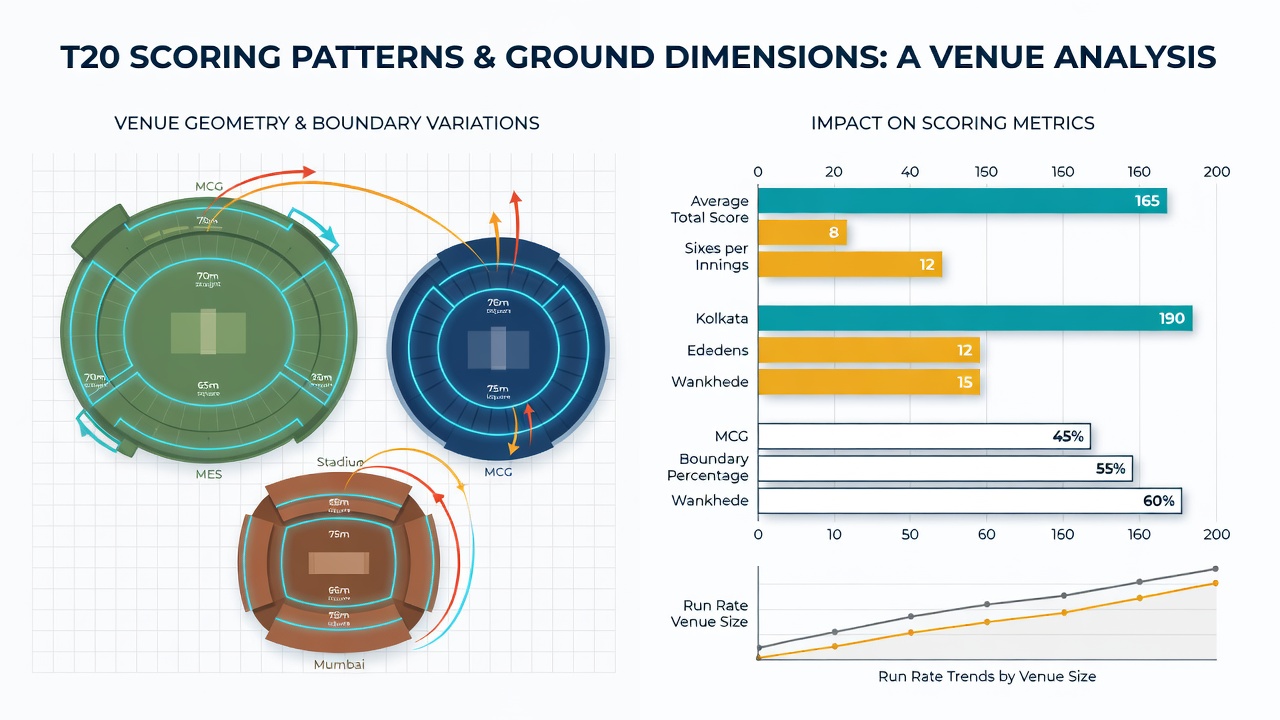
Take the MCG in Melbourne, where the square boundaries stretch beyond 80 meters in several directions, creating conditions that reward lofted drives over the infield rather than boundary-hitting attempts early in the innings. Statistics compiled through 2026 indicate that T20 matches here produce run rates averaging 7.8 per over in the first six overs, a figure that rises only when teams accelerate in the middle phase. In contrast, venues like the Eden Gardens in Kolkata feature shorter square boundaries around 60 meters, leading to higher percentages of fours and sixes struck in the powerplay as batters target those areas with greater confidence.
At Lord's in London, the slope combined with longer straight boundaries influences both batting approach and field placement decisions, with bowlers often conceding fewer boundary hits per over according to match logs maintained by governing bodies. Observers have noted similar dynamics at the Wanderers Stadium in Johannesburg, where altitude interacts with expansive dimensions to produce totals that climb steadily rather than in explosive bursts. These variations create distinct tactical adjustments, as teams review historical data before selecting playing XIs suited to each location's specific constraints.
Statistical Patterns Across Regions
Analysis of T20 fixtures from 2023 through August 2026 reveals that grounds with overall perimeters below 200 meters see six-hitting rates increase by approximately 22 percent compared to larger stadiums. Figures released by regional cricket boards demonstrate how these differences compound during chases, where smaller boundaries allow teams to maintain higher required rates with fewer risks of mistimed shots carrying to fielders. Experts reviewing ball-tracking technology outputs have identified that edges and mishits travel farther on compact venues, converting potential dots into boundaries more often than on expansive outfields.
One study of matches at the Dubai International Cricket Stadium highlighted how the relatively square dimensions there produce elevated scoring in the death overs, as batters exploit shorter straight boundaries with ramp shots and switch hits. Data indicates comparable effects at the Wankhede Stadium in Mumbai, where quick outfields paired with moderate boundary lengths amplify running between the wickets alongside aerial aggression. These patterns hold across both franchise and international competitions, providing analysts with reliable benchmarks for projecting match outcomes based on venue specifications alone.
Strategic Adaptations by Teams
Coaches and players review ground dimension charts in advance of fixtures, adjusting training drills to emphasize lofted shots on smaller grounds while focusing on placement and running on larger ones. Evidence from match simulations shows that teams facing compact boundaries allocate more resources to power hitters in their top order, whereas those preparing for expansive venues prioritize all-rounders capable of rotating strike effectively. Tournament organizers in 2026 have incorporated these insights into scheduling decisions, pairing teams with complementary strengths against specific venue profiles.
Boundary rope placements also shift during matches in response to weather or wear, further altering expected scoring outputs as documented in official scorecards. Those who've examined extensive datasets note that dew factors compound dimension effects during evening games, making larger grounds slightly more batsman-friendly later in the day when the ball grips less on damp surfaces. Such interactions create layered variables that analysts incorporate into predictive models used by franchises worldwide.
Conclusion
Ground dimensions continue to serve as foundational elements shaping T20 scoring across major venues, with measurable impacts on run rates, shot selection, and overall match totals documented through ongoing data collection efforts. Regional variations in field sizes produce distinct patterns that teams account for when preparing strategies, while technological tracking tools provide increasingly precise insights into how these physical attributes interact with player skills and environmental conditions. As competitions expand through 2026 and beyond, these venue-specific characteristics remain central to understanding performance trends in the format.