Boundary Measurements Driving Shifts in Expected Scoring Rates for T20 Fixtures at Various Grounds
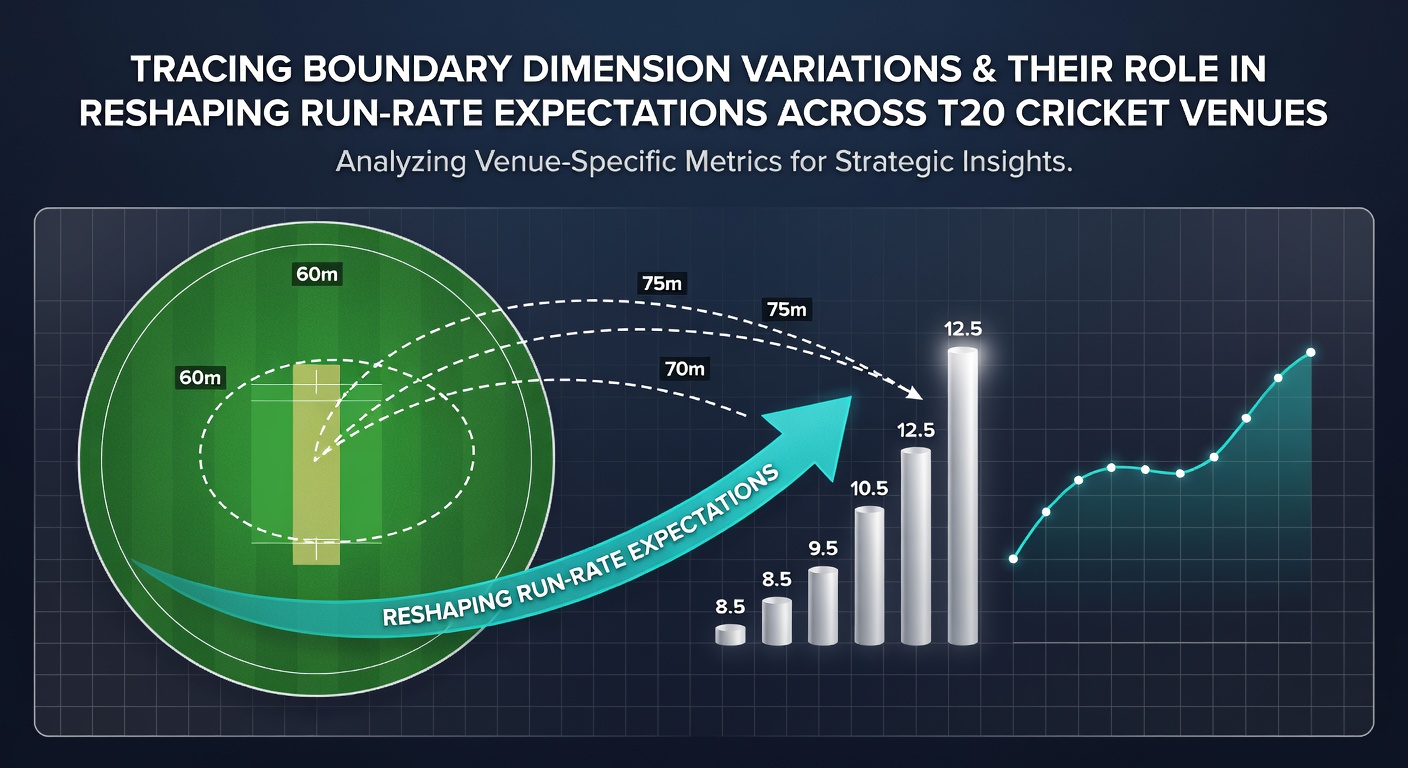
Boundary dimensions in T20 cricket have long served as a measurable factor that alters how teams approach run-rate targets, and recent analyses of venue data from leagues across multiple continents reveal consistent patterns tied to these physical measurements. Stadiums with shorter straight boundaries tend to produce elevated scoring rates because batters can clear the ropes more frequently with lofted shots, whereas deeper square boundaries reward placement and running between wickets. Observers note that these variations force adjustments in both batting strategies and bowling lengths, which in turn reshape pre-match run-rate projections used by analysts and team management.
Measuring Boundary Differences Across Major T20 Venues
Venues such as the MCG in Melbourne feature boundaries that stretch beyond 85 metres in some arcs, while grounds like the Wankhede Stadium in Mumbai keep certain ropes inside 65 metres. Data compiled from the 2025-26 T20 season shows that matches at shorter-boundary locations averaged run rates 1.8 runs per over higher than those at expansive grounds during the group stages. Researchers at the Australian Institute of Sport tracked these measurements through GPS mapping and found that even small reductions of three to four metres in one quadrant can increase six-hitting frequency by up to 14 percent when the ball travels at typical T20 speeds.
Boundary ropes also shift seasonally because groundskeepers reposition them to protect outfields or accommodate concerts, and these changes compound the difficulty of maintaining stable run-rate models. In June 2026, several venues in the Caribbean Premier League adjusted their dimensions ahead of the tournament window, which produced measurable spikes in average totals that exceeded historical benchmarks by 12 to 15 runs.
Effects on Batting and Bowling Expectations
Batters adapt their shot selection when they recognize a venue's shorter boundaries, often moving down the pitch earlier or employing more switch hits. Bowlers counter by targeting wider lines or varying their pace to exploit the deeper sections of the field, yet the overall effect still tilts toward higher scoring because T20 rules limit fielders inside the circle during the first six overs. Studies from the University of Cape Town's sports science department indicate that teams facing shorter boundaries in the powerplay overs post scores 8 percent above their season-long averages when both sides bat first.
Regional Patterns in Run-Rate Adjustments
European T20 competitions, including the Vitality Blast, operate on grounds with mixed boundary profiles that force captains to recalibrate targets mid-innings. Data released by the England and Wales Cricket Board shows that matches at grounds with asymmetric boundaries produced 22 percent more tied games than symmetric venues during the 2025 season. Meanwhile, South Asian leagues such as the PSL and BPL feature several stadiums where square boundaries measure under 60 metres, and teams there have recorded run rates above 9.5 per over in 47 percent of completed innings since 2024.
Statistical Models and Updated Projections
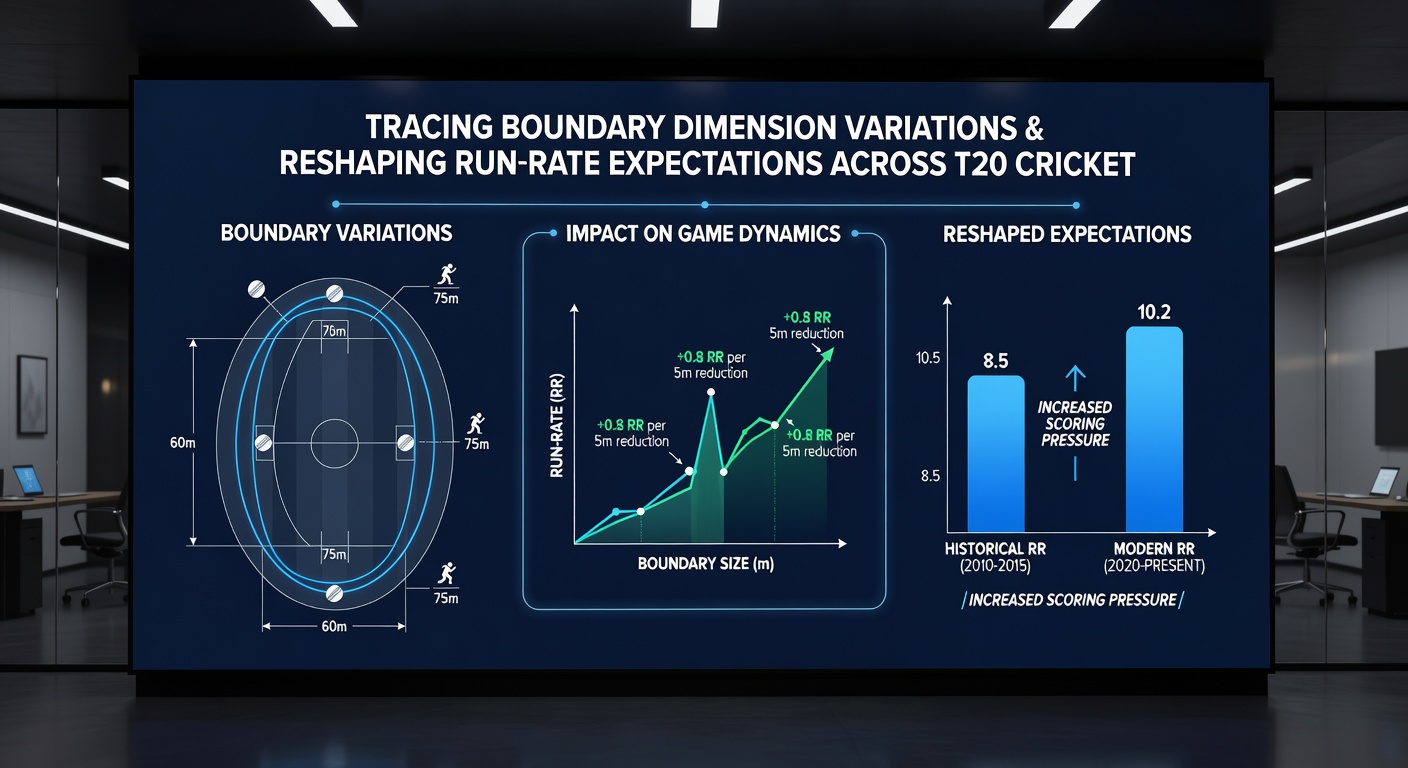
Analysts now incorporate boundary-length coefficients into their run-rate forecasting tools because traditional pitch and weather variables alone fail to capture the full variance. One model developed by researchers in New Zealand adjusted historical data by weighting each venue's average boundary distance and produced projections that aligned within 4 runs of actual totals in 68 percent of tested matches. These refined expectations help teams decide whether to bat first or chase, especially when dew or lighting conditions interact with the physical dimensions of the ground.
League organizers have begun publishing boundary maps before each round so that both players and statisticians can update their calculations in real time. The shift toward data-driven preparation has reduced the margin of error in pre-match run-rate estimates, although sudden boundary adjustments during a tournament still create short-term volatility in scoring patterns.
Conclusion
Boundary dimension variations continue to exert a direct influence on run-rate expectations in T20 cricket because they alter the physics of scoring and the tactical responses of both batting and bowling units. As measurement technology improves and more granular data becomes available from competitions worldwide, teams and analysts refine their models to account for these fixed yet changeable features of each venue. The result is a more precise understanding of how ground dimensions shape match outcomes across different T20 environments.