Elevation's Influence on Goal Margins in MLS Contests at Mountain Venues
Casey Beck · Jul 19, 2026
Elevation's Influence on Goal Margins in MLS Contests at Mountain Venues
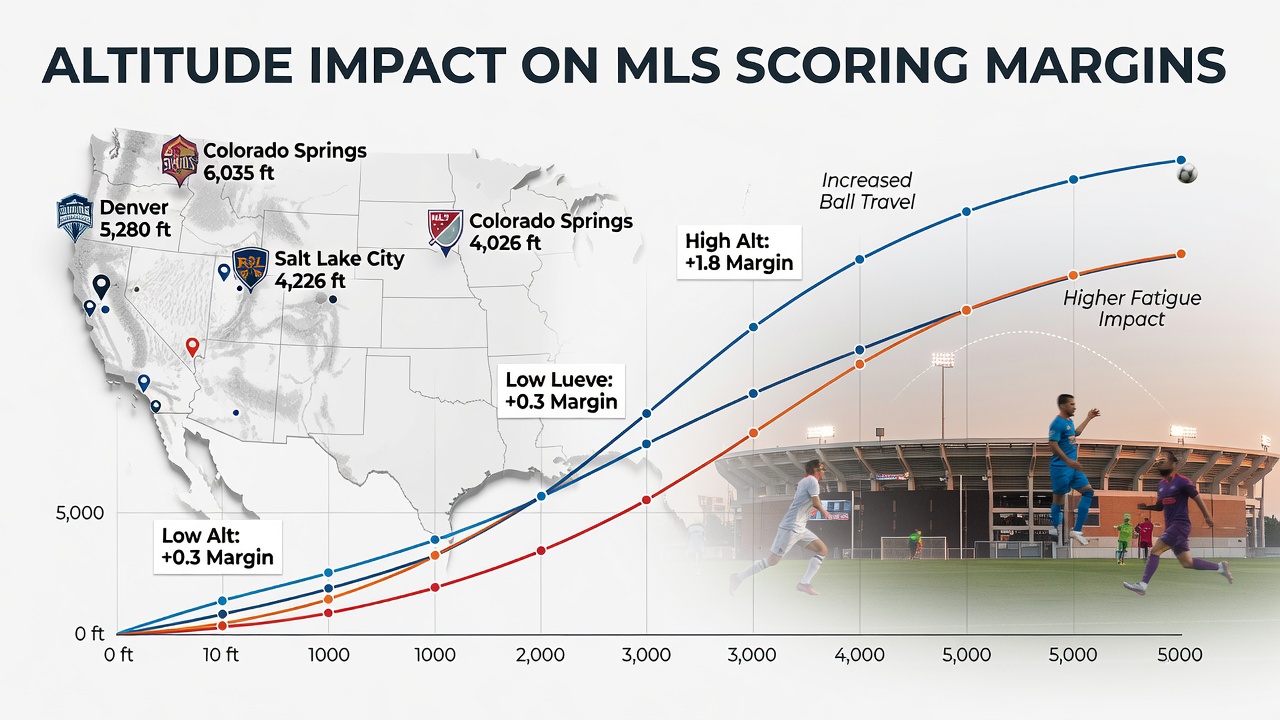
Data from Major League Soccer indicates that altitude plays a measurable role in how matches unfold at venues situated above 4,000 feet, with effects appearing most consistently at sites like Dick's Sporting Goods Park in Commerce City, Colorado, which sits at approximately 5,280 feet. Teams visiting these locations encounter reduced oxygen availability that influences both ball trajectory and player endurance, and records compiled through the 2025 season show visiting sides posting lower average goal outputs in the second half compared to their performances at sea-level grounds.
Ball Flight Characteristics at Reduced Air Density
Thinner air at elevation reduces drag on the soccer ball, allowing it to travel farther when struck with the same force while also producing flatter trajectories on long passes and shots. Researchers at the University of Colorado have documented these dynamics through controlled testing, noting that a standard strike can extend an additional 5 to 10 percent in distance above 5,000 feet. MLS match logs reflect this pattern, with teams based at high elevation recording higher rates of shots from outside the penalty area that find the target during home fixtures.
Visiting squads often adjust their approach by emphasizing shorter passing sequences early in games, yet data from the 2025 campaign reveals that such tactical shifts frequently result in fewer clear scoring opportunities before halftime. The same atmospheric conditions can amplify the effectiveness of set-piece deliveries, since crosses and free kicks maintain speed over longer distances without the usual deceleration experienced at lower elevations.
Player Physiology and Match Flow
Oxygen levels drop by roughly 15 to 20 percent at 5,000 feet compared with sea level, which accelerates fatigue during repeated high-intensity efforts. Studies conducted by Canadian sports science groups have tracked heart-rate responses and recovery intervals among players transitioning between venues, and findings show that visiting athletes require longer periods to regain baseline performance after sustained running bouts. This physiological demand appears most pronounced after the 60-minute mark, when cumulative effects begin to surface in reduced sprint frequency and defensive positioning errors.
MLS scheduling records indicate that teams traveling to Colorado or Utah venues in July 2026 face additional variables, including warmer afternoon temperatures that compound the oxygen deficit. Historical scoreline data from those periods shows an uptick in goals conceded during the final 30 minutes, particularly when the visiting side maintains possession for extended stretches in the first half.
Scoring Margin Patterns Across Seasons
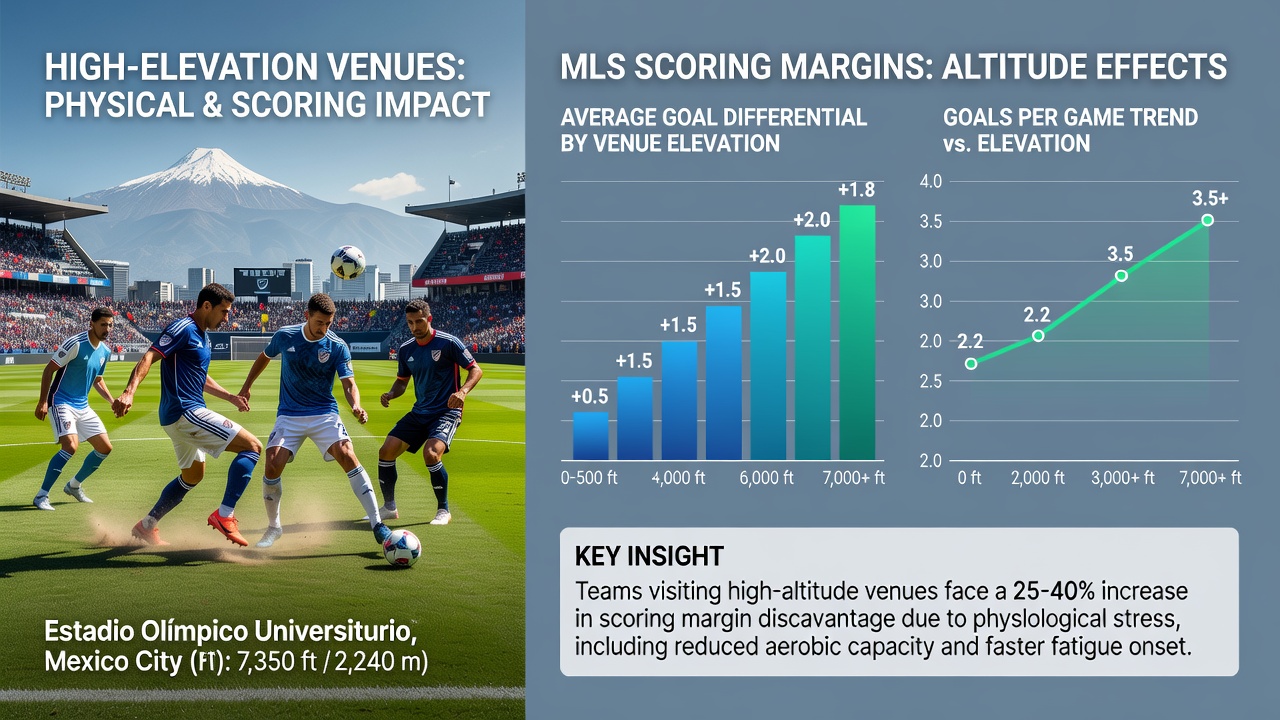
League-wide statistics compiled since 2018 reveal that home teams at elevation maintain a higher average goal differential in matches decided by two or more goals. The pattern holds across both regular-season and playoff fixtures, with the largest margins typically emerging when visiting clubs enter the match after a short recovery window following midweek travel. Defensive units from lower-altitude clubs post higher error rates on long balls and through passes that exploit the extended flight characteristics of the ball.
Coaches have adapted by rotating midfield personnel more frequently during away games at these sites, and substitution data from the 2025 season shows an increase in fresh legs introduced between the 55th and 70th minutes at high-elevation stadiums. Such changes correlate with narrower scoring margins in the later stages, although overall goal totals remain elevated relative to matches played at venues below 1,000 feet.
Comparative Venue Analysis
While Commerce City represents the most extreme case within MLS, matches at other western venues such as those in Salt Lake City and the Pacific Northwest also display measurable but smaller effects. Data aggregated by academic researchers at institutions across North America indicates that scoring margins compress gradually as elevation decreases, with the steepest changes occurring between 3,000 and 5,000 feet. Teams that split their schedule between coastal and mountain sites must account for these gradients when planning training loads and recovery protocols in advance of road trips.
Match reports from July 2026 fixtures continue to illustrate the same directional trends observed in prior years, suggesting that the underlying physical mechanisms remain consistent even as squad compositions evolve.
Conclusion
Altitude introduces consistent, quantifiable influences on both ball behavior and player capacity that shape scoring margins in MLS matches at high-elevation venues. Statistical records and physiological measurements together demonstrate that these effects concentrate in specific phases of play and time segments, providing a factual basis for understanding performance differences across the league's geographic spread.