How Court Surfaces Alter Serve Percentages in Grand Slam Matches
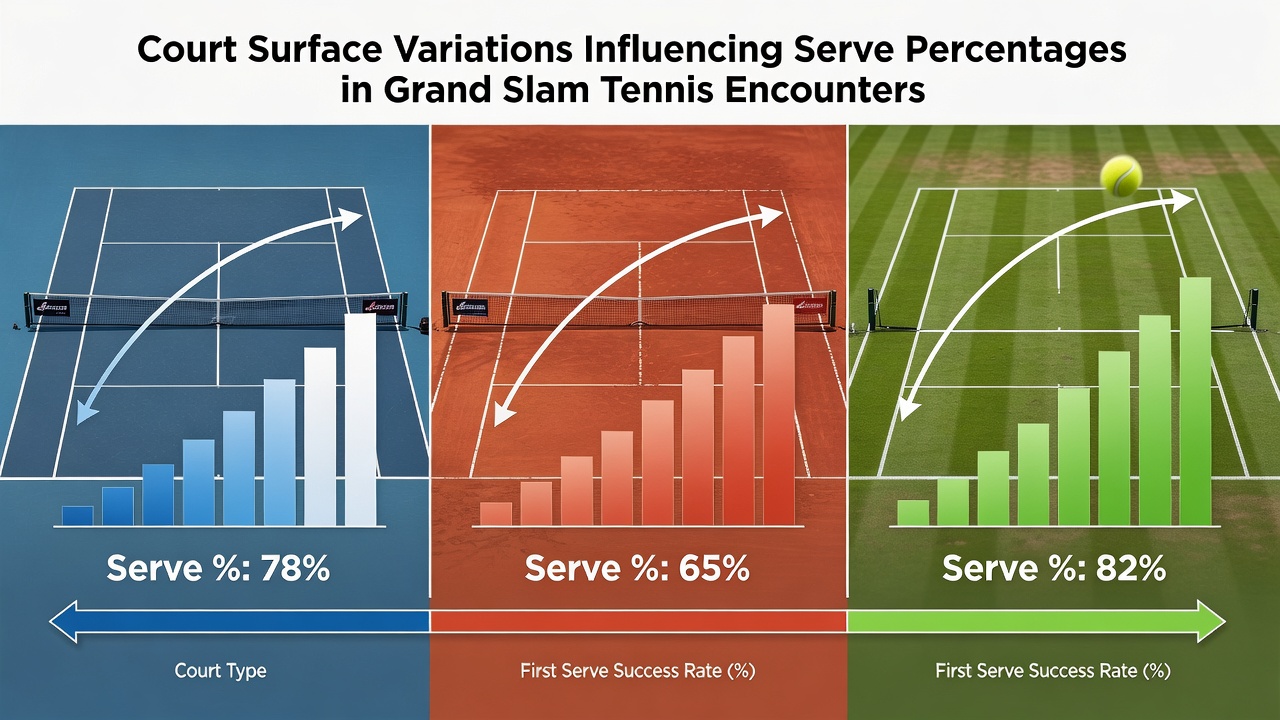
Grand Slam tournaments showcase distinct court surfaces that directly shape player serve statistics, and researchers have tracked these patterns across decades of matches at Wimbledon, Roland Garros, Melbourne Park and Flushing Meadows. Grass courts produce the quickest ball speeds after bounce, which allows servers to generate higher ace counts and first-serve win rates compared with slower surfaces. Clay courts slow the ball considerably and create higher bounce, which reduces serve effectiveness and forces longer rallies that lower overall serve-point conversion numbers.
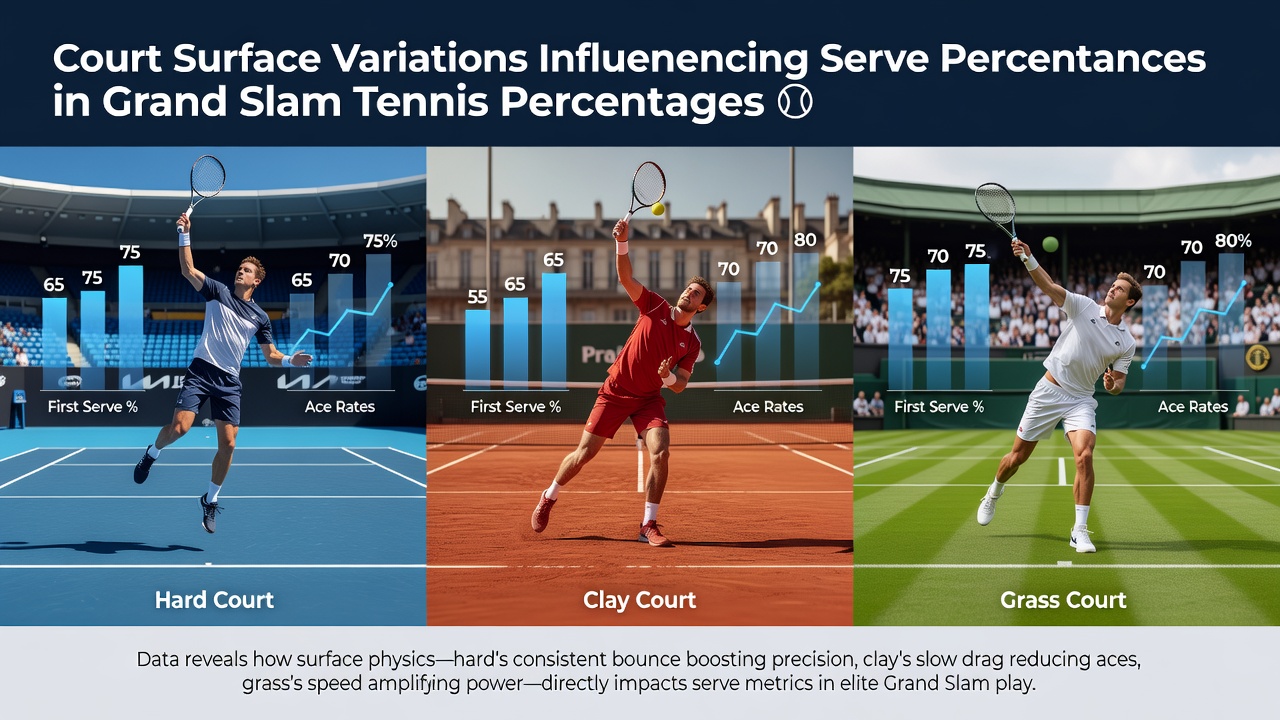
Data collected from official tournament records shows that average first-serve percentages remain relatively stable across surfaces, yet the points won behind those serves vary sharply. On grass, servers often convert between 78 and 82 percent of first-serve points during recent Wimbledon editions, while the same metric drops to the low 60s on clay at the French Open. Hard courts sit in the middle range, with both the Australian Open and US Open typically recording first-serve win rates around 70 to 74 percent in comparable rounds.
Grass Courts and Serve Dominance at Wimbledon
Wimbledon’s grass surface rewards flat, powerful serves because the low bounce keeps the ball close to the court and shortens reaction time for returners. Players who rely on slice serves into the body or wide kick serves also benefit from the skidding action that grass encourages, and historical match logs confirm that ace totals rise noticeably during the second week when courts dry and wear patterns develop. Observers note that big servers reach teh later stages more frequently at this event than at clay-court majors because their service games face fewer breaks overall.
Clay Courts and Reduced Serve Efficiency at Roland Garros
The red clay at Roland Garros slows incoming serves through greater friction and produces a higher, looping bounce that gives returners extra time to position themselves. Studies of French Open matches indicate that even top-ranked servers win roughly 10 to 15 percentage points fewer service points than they achieve on grass, and double-fault rates climb slightly as players attempt to add margin. The extended rally lengths that follow successful returns further diminish the raw value of a strong first serve, which explains why baseline-oriented competitors have historically posted stronger results at this venue.
Hard Courts and Balanced Serve Metrics in Australia and the United States
Both the Australian Open and US Open use hard-court surfaces that deliver medium pace and relatively predictable bounce, creating serve statistics that fall between grass and clay extremes. Recent data sets reveal that first-serve win percentages stabilize near 72 percent across these events, with slight variations depending on temperature, humidity and court speed ratings published by the respective organizers. The Australian hard courts tend to play a touch quicker in the evening sessions, while the US Open courts can slow as the tournament progresses into later rounds, and these incremental changes produce measurable but modest shifts in ace frequency and service-break percentages.
Statistical Patterns and Player Adaptations
Match analytics compiled by the International Tennis Federation demonstrate consistent surface-driven differences in serve performance, and these figures hold across multiple player generations. Servers who possess versatile spin options tend to maintain higher percentages when transitioning from grass to hard courts, whereas those reliant on pure pace experience sharper drops on clay. Tournament organizers adjust ball specifications and court maintenance protocols each year, yet the underlying surface characteristics continue to dictate the direction and magnitude of serve-percentage changes observed in official scorebooks.
Players prepare for these variations through targeted practice regimens that emphasize different serve placements and spin rates depending on the upcoming surface. Coaches review historical point-by-point data to identify which serve directions yield the highest conversion rates at each venue, adn this preparation contributes to the surface-specific statistical profiles recorded in Grand Slam archives. The cumulative effect appears in career head-to-head records, where certain players maintain markedly better service-hold percentages at one major compared with the others.
Conclusion
Court surface variations produce clear, measurable effects on serve percentages throughout Grand Slam tennis, and these patterns remain stable enough to inform preparation strategies while still allowing for annual fluctuations caused by weather and maintenance. Grass surfaces elevate serve dominance, clay surfaces suppress it, and hard courts occupy the intermediate zone, with each major providing a distinct statistical environment that shapes match outcomes and player success rates in predictable ways.