Midweek League Dynamics: Early Red Cards Triggering Accumulator Value Reversals in Soccer Matches
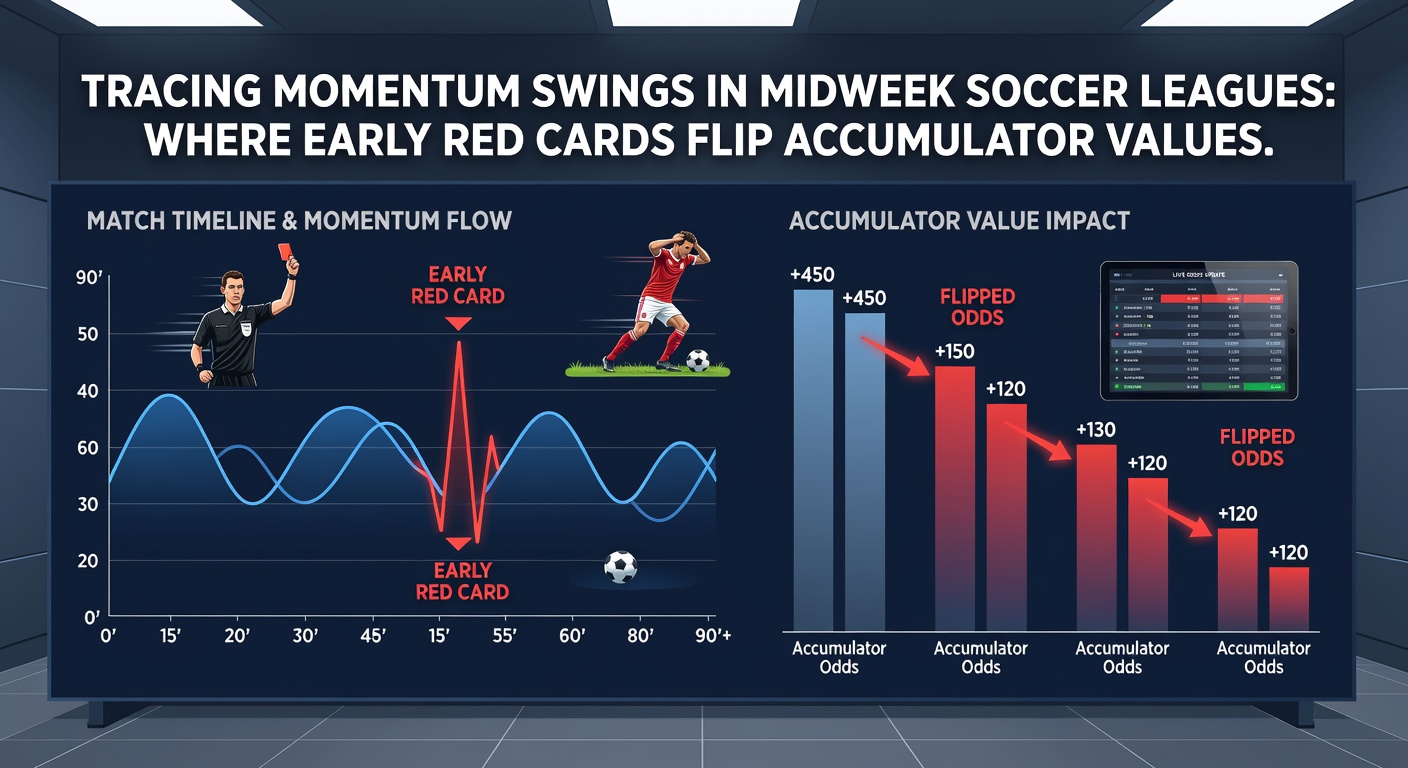
 Midweek soccer fixtures in various European leagues often feature packed schedules that test squad depth, and early red cards introduce sudden numerical imbalances that reshape match trajectories within the first twenty minutes. Data from recent campaigns shows teams reduced to ten players before the half-hour mark experience win rates dropping below fifteen percent in those specific games, while opponents capitalize on the extra space to control possession and create higher-quality chances. Observers note these shifts directly influence accumulator bets, where a single early dismissal can invalidate pre-match predictions on totals, handicaps, or team totals across multiple selections. Researchers tracking leagues such as the Bundesliga and Eredivisie have documented patterns where the timing of the red card matters more than the mere fact of it occurring. Cards issued inside the opening fifteen minutes correlate with larger goal margins in favor of the advantaged side, particularly when the trailing team plays an aggressive formation that leaves gaps behind. This creates measurable swings in expected goals metrics, with figures from Opta analyses revealing an average increase of 0.8 expected goals for the eleven-man side after such incidents. Accumulator builders who include over-2.5 goals or away team win selections in those matches frequently see their returns altered once the card appears, since bookmakers adjust live odds to reflect the new state of play.
Patterns in Midweek Scheduling and Disciplinary Trends
European domestic calendars place several leagues under pressure during midweek rounds, when clubs balance league commitments with European obligations or recovery from weekend fixtures. Statistics compiled across the 2025-2026 season indicate that matches played on Tuesdays and Wednesdays record slightly elevated red card rates compared with weekend slots, partly because fatigue affects decision-making and challenges become mistimed. In the Belgian Pro League and Portuguese Primeira Liga, for instance, the average number of red cards per midweek game reached 0.28 during the spring months, according to league disciplinary reports.
Those who've examined video evidence point to specific triggers: high pressing triggers more lunging tackles when players are already stretched by a congested fixture list. The result is that early sendings-off become pivotal moments that flip the script on pre-match accumulator structures built around favorites maintaining clean sheets or underdogs holding firm defensively. Live betting markets respond immediately, with spreads widening and totals climbing as the advantaged team pushes forward.
How Accumulator Values Respond to Numerical Imbalances
Accumulator bets combining multiple midweek selections become especially sensitive once an early red card lands because the altered match state cascades through several legs at once. A single event in one game can change the probability weighting for related outcomes in another fixture involving the same teams later in the week. Data from betting exchanges shows that when an early dismissal occurs, in-play odds on match totals adjust by an average of 0.75 goals within five minutes, prompting traders to reassess their multi-leg positions.
Take one study released by a European sports analytics firm in early 2026 that followed over four hundred midweek matches across five leagues. It revealed that accumulators containing both the affected match and a later fixture involving either side saw their implied probability shift by more than twelve percent on average after the card. Bettors holding positions on clean sheets or draw outcomes watched those legs move from likely to unlikely as the advantaged side dominated territory and shots. What's interesting is how this effect compounds when two midweek games feature similar incidents, creating correlated swings that either salvage or sink entire accumulator slips depending on the direction of the momentum change.
Case Examples from May 2026 Rounds
During the May 2026 midweek schedule in the Dutch Eredivisie, two separate matches saw red cards issued before the twentieth minute, and both produced goal tallies that exceeded pre-match expectations by at least two strikes. In one encounter the home side, already trailing on points in the title race, converted the numerical advantage into four goals after the dismissal, flipping accumulator legs built around under-2.5 goals across a four-team slip. Similar outcomes appeared in the Swiss Super League, where an early sending-off led to sustained pressure and a 3-1 final score that contradicted the low-scoring trend many accumulators had anticipated.
Those tracking these fixtures note that the recovery time between midweek and weekend rounds plays a role in how teams adapt. Clubs with deeper benches tend to mitigate the damage more effectively, whereas thinner squads suffer prolonged spells of defensive vulnerability. Figures released by league statisticians in May 2026 highlighted that teams playing their third match in eight days recorded red card rates nearly twenty percent higher than fresher opponents, amplifying the momentum swings that accumulator markets must price in real time.
Conclusion
Early red cards in midweek soccer leagues continue to serve as decisive inflection points that alter expected outcomes and force rapid recalibration of accumulator positions. The combination of fixture congestion, fatigue-related discipline issues, and immediate tactical adjustments creates conditions where one event can cascade across multiple betting selections. As leagues progress through the 2025-2026 campaign, monitoring these patterns provides clearer insight into how numerical imbalances translate into measurable shifts in match totals and team performance metrics.