Pitch Erosion Dynamics and Their Effects on Spin Bowling in Extended Cricket Fixtures

Multi-day cricket fixtures create unique conditions as pitches evolve through natural degradation processes that begin with the first ball and accelerate under repeated impact from players and equipment. Initial surfaces offer consistent bounce and limited assistance to spin bowlers, yet as matches progress into later days the accumulation of footmarks, cracks, and surface roughening alters ball behavior in measurable ways. Researchers from cricket performance analysis programs have documented these shifts through high-speed camera studies and pitch monitoring tools deployed by national boards across Australia, India, and South Africa.
Early Match Conditions and Limited Spin Assistance
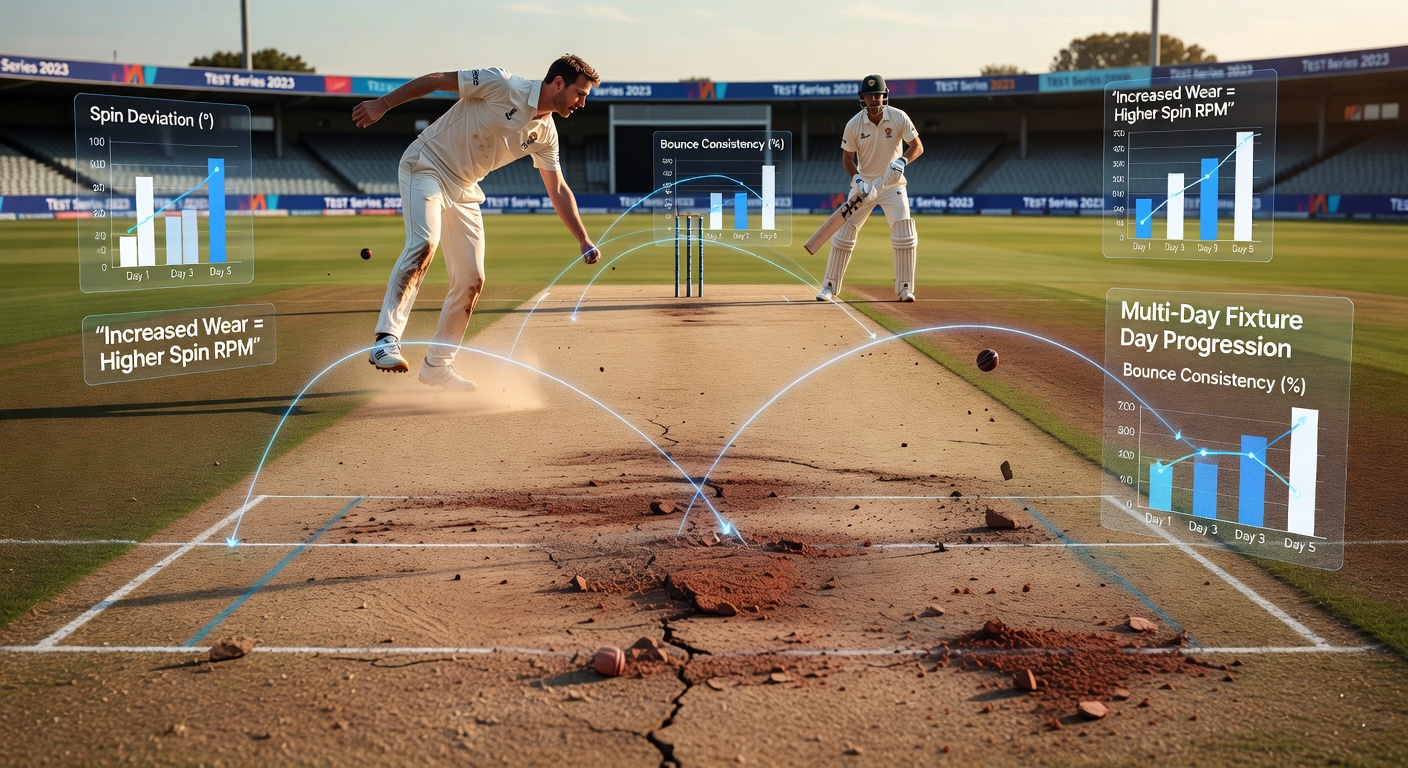
During the opening two days of a test encounter the pitch retains much of its original grass cover and moisture retention properties, which restricts the amount of turn spinners can generate. Data collected by the International Cricket Council technical committee shows average spin deviation rates remain below 2.5 degrees in the first innings on most venues when surfaces stay relatively fresh. Fast bowlers dominate early exchanges while spinners focus on containment rather than wicket-taking deliveries, and teams often delay full reliance on spin until wear patterns emerge.
Progressive Surface Changes and Increased Turn
By teh third day footmarks from fast bowlers create rough patches outside the off stump for right-handed batsmen, giving finger spinners pronounced grip and variable bounce. Observers note that clay content and soil composition determine how quickly these areas develop, with heavier soils cracking faster under dry conditions common in subcontinental venues during May series. Studies published by the University of Pretoria's sports science department tracked ball seam orientation and found spin bowlers achieved up to 35 percent greater turn angles once these patches formed, directly correlating with higher wicket tallies in afternoon sessions.
Statistical Patterns Across Recent Fixtures
Analysis of test matches played between 2023 and 2025 reveals consistent trends where spin returns improve markedly after day three. Figures from the Board of Control for Cricket in India indicate that spinners captured 62 percent of wickets in the final two innings of home test series when matches extended beyond 300 overs. Similar patterns appear in Ashes contests, where Australian and English spin attacks recorded elevated economy rate improvements once surfaces lost their initial firmness. These outcomes stem from measurable changes in friction coefficients rather than random variation.
Factors Accelerating Pitch Wear
Weather plays a decisive role because high temperatures and low humidity accelerate drying and cracking, whereas intermittent rain can temporarily bind loose material and slow degradation. Groundskeepers manage this through rolling schedules and watering patterns, yet their interventions cannot fully counteract the cumulative effect of 90 overs per day. Equipment choices also matter, as heavier bats and aggressive footwork from batsmen deepen indentations that later assist wrist spinners seeking drift and dip. Venues in drier climates such as those managed by Cricket Australia tend to produce more pronounced spin-friendly conditions by day four compared with greener English surfaces.
Strategic Adjustments by Teams
Captains adapt field placements and bowling rotations in response to these evolving conditions, often introducing spin earlier on the third morning when rough patches first become exploitable. Data from match simulations run by New Zealand Cricket's high-performance unit demonstrates that proactive spin deployment on wearing pitches increases overall wicket probability by 18 percent compared with delayed introductions. Bowlers themselves modify grip and release points to exploit variable bounce, turning potential defensive spells into attacking opportunities as the match stretches into its final stages.
Conclusion
Pitch wear patterns create predictable yet venue-specific advantages for spin bowlers as multi-day fixtures unfold, with statistical evidence confirming higher returns once surfaces roughen and crack. National boards continue refining monitoring techniques to better understand these dynamics, allowing teams to optimize strategies based on objective measurements rather than intuition alone. The interplay between soil composition, weather exposure, and player impact ensures each extended contest presents distinct challenges that reward those who read the surface changes accurately.