Prolonged Baseline Battles on Clay Reshape Over Markets at Elite Tennis Events
Casey Krüger · Jul 15, 2026
Prolonged Baseline Battles on Clay Reshape Over Markets at Elite Tennis Events
Clay Court Characteristics and Rally Length
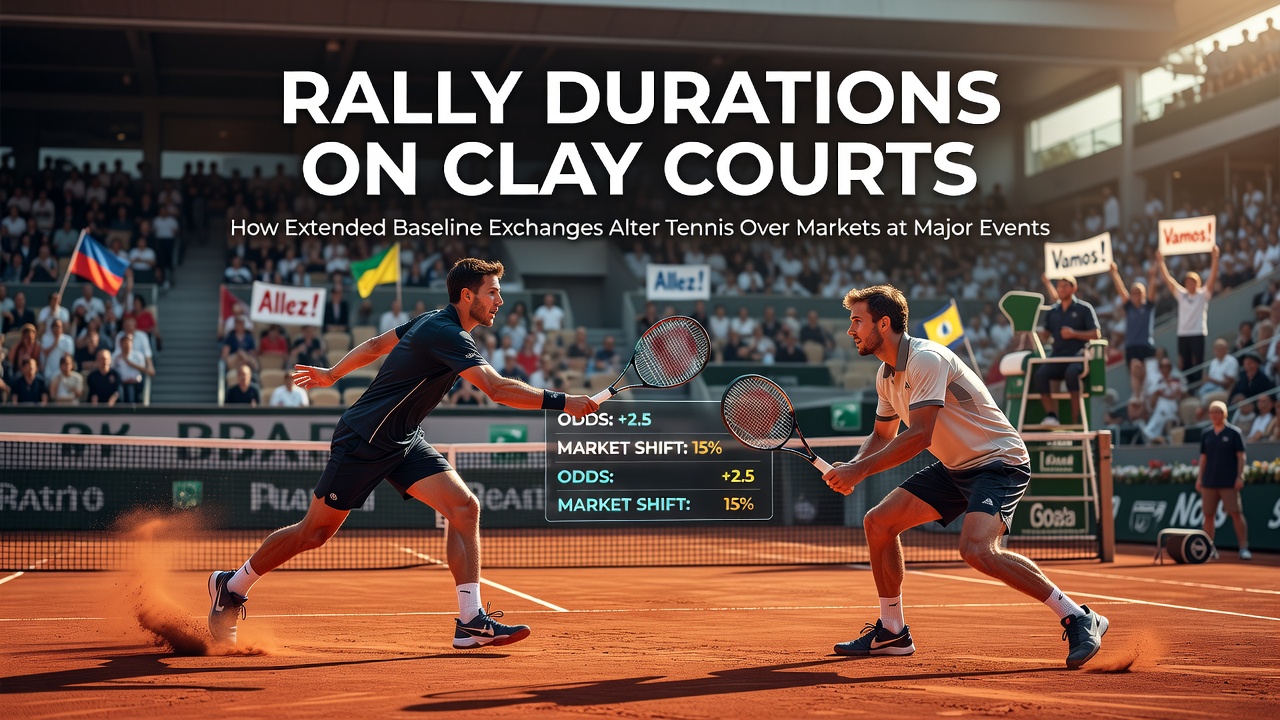
Clay surfaces slow ball velocity while producing higher bounces compared with grass or hard courts, and this combination forces players into extended baseline exchanges that often stretch beyond ten shots per point. Data from the French Open shows average rally lengths on clay reach 8.4 strokes while the same metric falls to 5.2 strokes on grass at Wimbledon. Those extra exchanges increase total points played and push many games past the point totals that over markets anticipate.
Statistical Patterns in Point Accumulation
Researchers tracking ATP matches between 2023 and 2026 found that clay-court games average 7.8 points when rallies exceed nine strokes versus 5.9 points in shorter exchanges. This difference compounds across sets because longer rallies also raise the likelihood of deuce situations and extended service holds. Observers note that the extra points accumulate most noticeably in the middle games of sets when both players have settled into defensive patterns.
Effects on Over/Under Betting Lines
Bookmakers adjust totals for clay events by adding roughly 1.5 games to the expected match length compared with hard-court equivalents. Yet market data reveals that over bets still land at higher rates during French Open weeks because actual point counts exceed the adjusted lines. In July 2026, clay-court swing events in Europe recorded over percentages of 53.7 percent across main-draw matches while the same metric sat at 48.2 percent on hard courts during the same period. The discrepancy arises because extended rallies raise fatigue levels and produce more unforced errors that paradoxically lengthen games through repeated breaks of serve.
Player-Specific and Surface-Specific Variables
Left-handed players and those who rely on heavy topspin generate longer rallies on clay because their shots skid less and bounce higher into opponents' strike zones. Studies from the International Tennis Federation indicate that matches featuring two baseline-oriented players produce 14 percent more total points than encounters mixing serve-volley styles. Weather conditions further modulate these effects since high humidity softens the clay and increases friction, extending rallies even more. Bettors who monitor pre-match humidity readings and player profiles can identify spots where over lines sit too low relative to expected point volume.
Market Movement and Liquidity Considerations
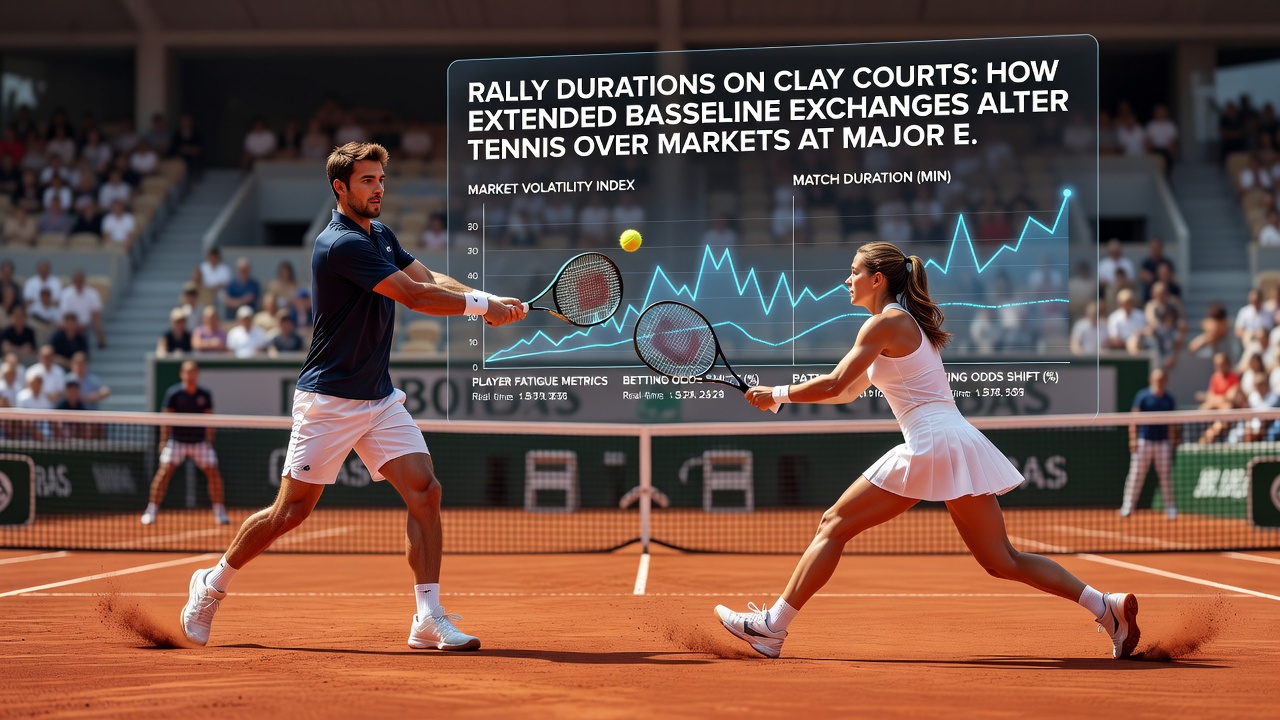
Sharp money tends to target over totals early in clay-court tournaments before limits tighten. According to ATP tour analytics, line movement on over markets during the 2026 clay season averaged 0.8 games toward the over within the first hour of betting. This pattern occurs because syndicates recognize that rally length data from practice sessions and early rounds often exceeds historical averages used to set opening lines. Retail bettors following steam moves have recorded improved results when they wait for modest line inflation rather than betting immediately after release.
Comparative Data Across Surfaces
Hard-court events produce shorter rallies and therefore lower total points, yet clay tournaments consistently generate the highest over hit rates among Grand Slam surfaces. A 2025 academic paper from the University of Queensland's sports analytics group compared 1,200 matches across surfaces and found clay events exceeded over lines 52 percent of the time while grass events fell below over lines 51 percent of the time. The difference stems directly from rally duration because each additional stroke adds measurable time and physical demand that translates into more points before games conclude.
Conclusion
Extended baseline exchanges on clay alter the distribution of points and games in ways that directly influence over-market outcomes at major events. Surface characteristics, player tendencies, and environmental factors combine to produce measurable deviations from expected totals. Those who track rally-length statistics alongside line movement gain access to patterns that persist across multiple clay-court seasons.