Roster Shifts Ripple Through Map Selection Strategies in Pro eSports Leagues
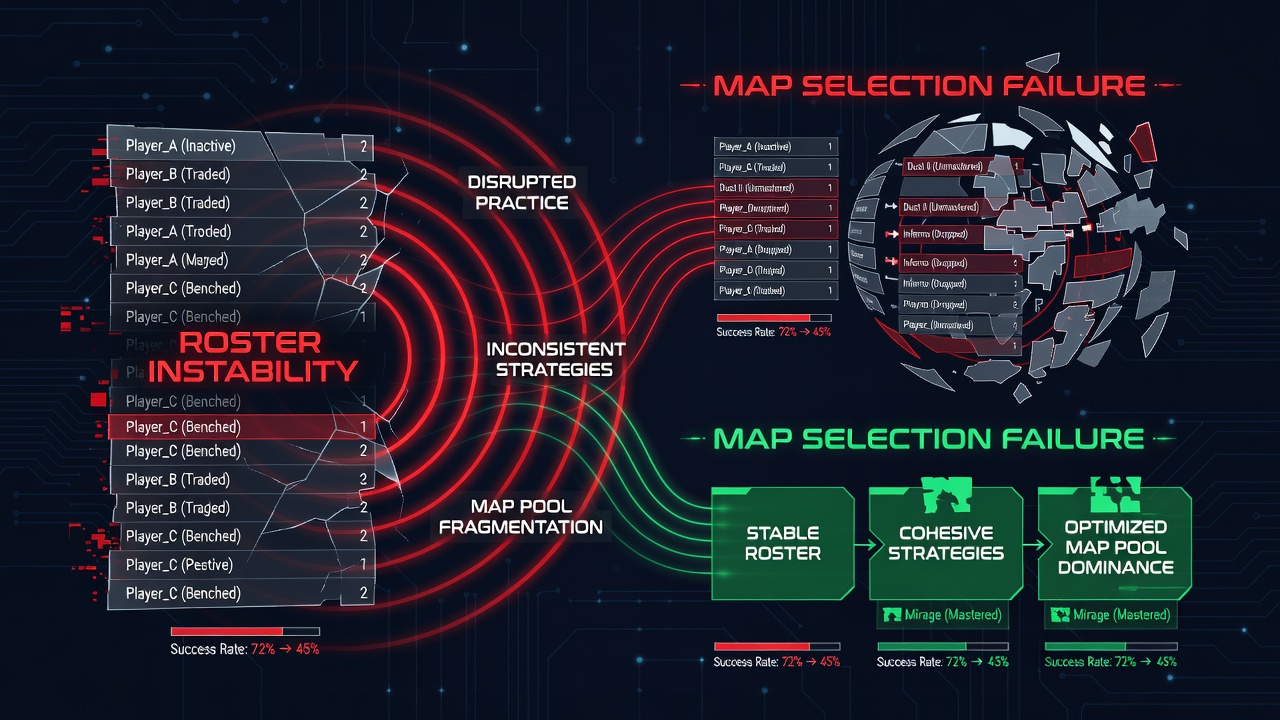
Teams across major circuits like VCT Americas and ESL Pro League face ongoing roster adjustments that directly influence their map selection outcomes, with data from recent seasons showing measurable drops in success rates on certain maps following player departures. Observers note that when organizations cycle through multiple roster moves within a single split, coordination on complex maps suffers because new lineups require extended practice periods to master callouts and utility lineups.
Research from the University of California Esports Lab indicates that squads experiencing two or more roster changes in a three-month window record an average 18% decline in map win rates during the initial months after integration, particularly on maps requiring precise timing such as Ascent or Inferno. The study tracked 47 professional teams across 2025 and early 2026, revealing that map pools shrink as coaches avoid selections where chemistry remains untested.
Practice Time Allocation and Map Familiarity
Coaches report that roster instability forces squads to redistribute limited scrimmage hours away from experimental maps toward safer options where individual mechanics can compensate for missing team synergy. This shift creates predictable patterns in pick-ban phases, as opponents quickly identify and exploit the narrowed map pool during tournament play. Data from the 2026 mid-season tournaments showed teams with high turnover selecting from just three maps in over 60% of series, compared to four or five maps for stable lineups.
What's interesting emerges when examining how in-game leaders adapt their veto strategies. New players often bring different map preferences from previous teams, prompting coaches to overhaul entire ban priorities mid-season, and this recalibration process typically spans four to six weeks before consistent results return. Figures from June 2026 VCT events highlight that organizations maintaining core rosters through the spring period achieved map success rates above 72% on their chosen selections, whereas those undergoing changes lagged at 54%.
Communication Breakdowns on Utility Execution
Map success depends heavily on synchronized utility usage and information sharing, elements that fracture when unfamiliar players join established groups. Analysts tracking voice comms across professional matches found that teams with recent additions averaged 23% fewer coordinated executes on maps like Lotus or Ancient during the first month of competition. These gaps appear most clearly in post-plant scenarios where timing windows demand precise knowledge of teammate positioning.
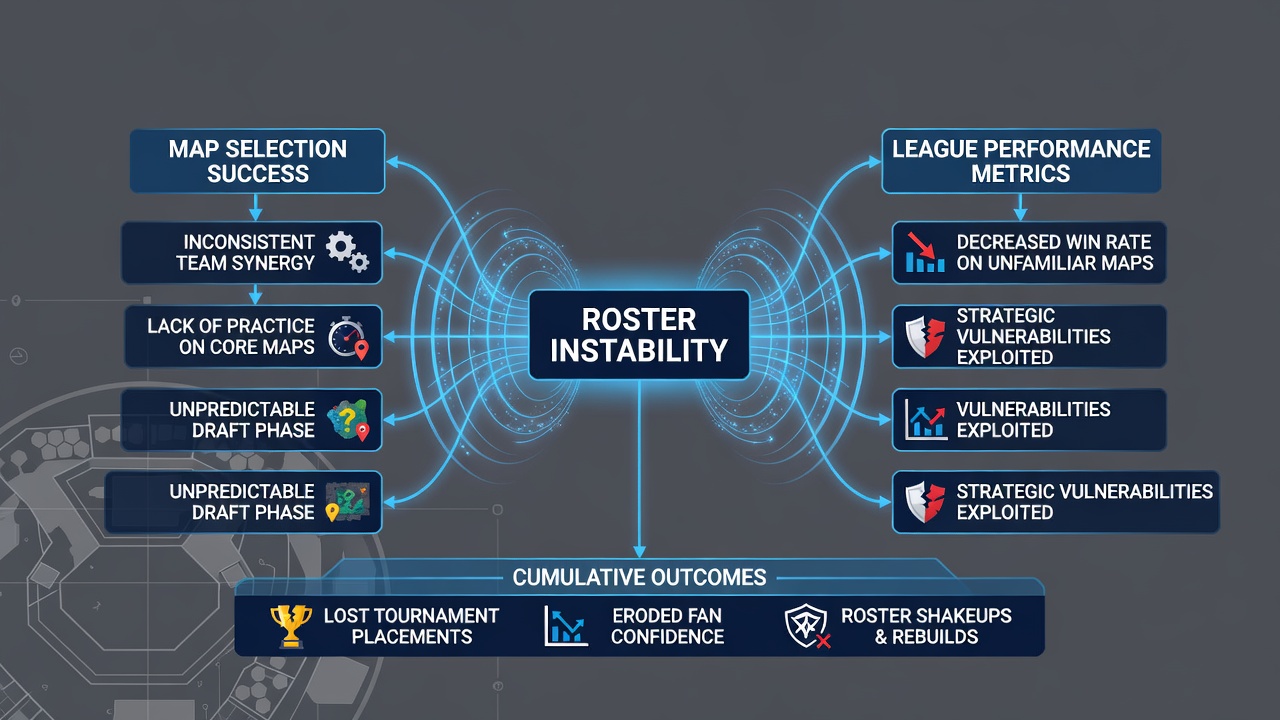
European squads competing in BLAST Premier circuits demonstrate similar trends according to reports compiled by the European Esports Federation. Rosters incorporating international players face additional layers of adaptation as language nuances and cultural approaches to map reading require extra calibration time, leading some organizations to delay map pool expansions until after major events conclude. The federation's 2026 season review documented that stable domestic lineups expanded their viable map selections by an average of 1.4 maps per split, while mixed rosters maintained narrower pools throughout the year.
Strategic Adjustments by Opposing Teams
Opponents quickly capitalize on known roster flux by forcing map selections that expose integration weaknesses. Scouting reports circulated among coaching staffs now routinely flag recent roster moves as primary indicators for veto decisions, creating a feedback loop where instability becomes self-reinforcing across the league. Tournament data from the first half of 2026 shows that teams facing opponents with documented roster changes won 67% of map selections when steering toward maps requiring high coordination.
Longer-term effects include shifts in overall league competitiveness, as organizations with deeper benches and retention policies maintain broader map versatility throughout extended seasons. The pattern repeats across regions, with Pacific and Americas circuits both recording parallel declines in map diversity among teams logging multiple roster transactions during the spring window.
Conclusion
League administrators and team management continue monitoring these correlations as roster rules evolve heading into the latter half of 2026. The measurable connections between player retention and map selection success provide concrete benchmarks for organizations evaluating trade deadlines and contract structures across professional circuits.