Umpire Decision Shifts Reshaping Run Projections in Tense ODI Moments
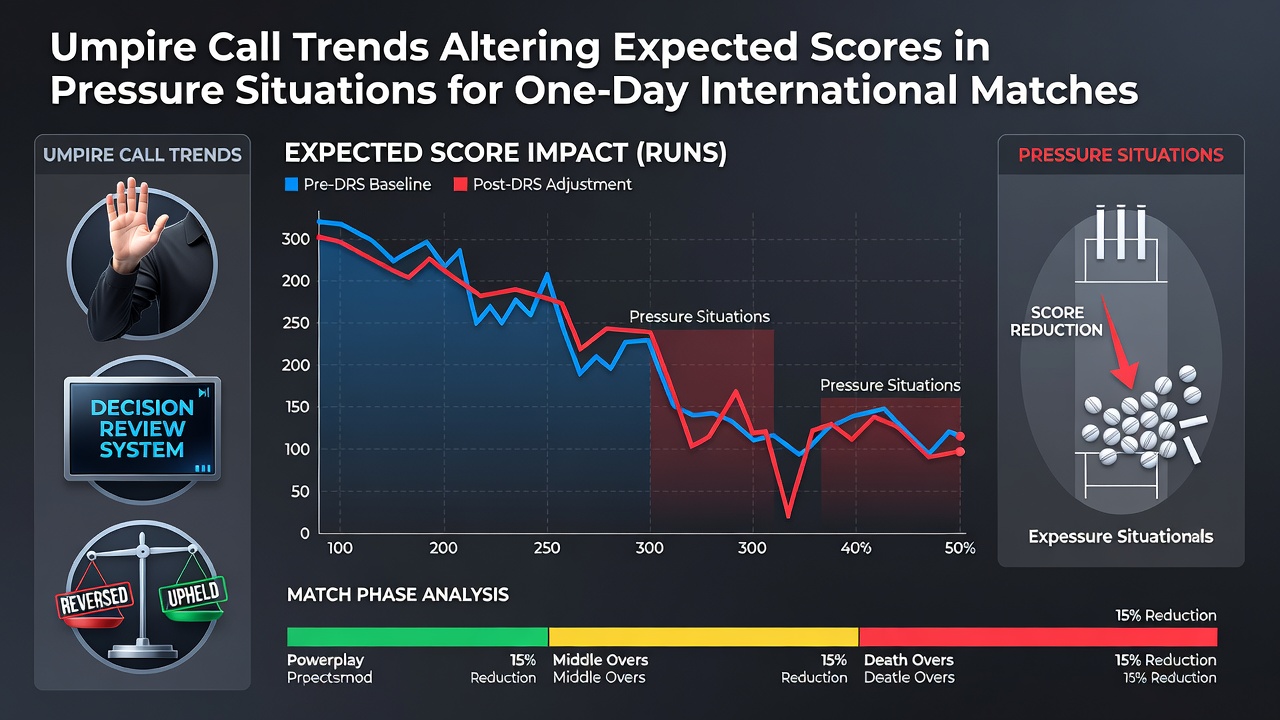
One-day international matches create unique pressure environments where umpire calls on marginal decisions often redirect projected run totals, and analysts track these patterns through detailed ball-by-ball data across multiple series. Researchers compile statistics from hundreds of ODIs to isolate how lbw rulings, caught-behind reviews, and no-ball corrections in the middle overs or death phase alter expected scores by measurable margins, and those shifts become more pronounced when teams chase targets under 250 or defend totals around 280.
Defining Pressure Situations in Limited-Overs Cricket
Pressure situations typically arise between overs 25 and 40 when a batting side loses early wickets or faces a required rate above six runs per over, while bowlers operate with fields set for containment rather than attack. Data from recent World Cup cycles shows that decisions reviewed via the Decision Review System cluster heavily in these phases, with leg-before-wicket appeals succeeding at higher rates when the ball pitches in line and strikes the pad on the stumps. Observers note that such calls reduce expected scoring rates by roughly 8 to 12 runs per innings on average, because the incoming batter must rebuild rather than accelerate immediately.
Trends in Umpire Call Accuracy and Frequency
International Cricket Council records indicate that DRS interventions in ODIs have increased steadily since 2020, with umpires overturning roughly 28 percent of on-field calls across major bilateral series. In July 2026, several high-profile tournaments highlighted a spike in successful reviews for caught-behind decisions during the 35-to-45 over window, where thin edges previously given not-out altered match projections by forcing new batters to face spin or seam in the power surge. Figures from match analytics platforms reveal that teams batting second experience a sharper drop in expected totals when an early wicket falls to a reviewed lbw, because the chase dynamic leaves less margin for recovery compared with first-innings batting.
Measurable Effects on Expected Scores
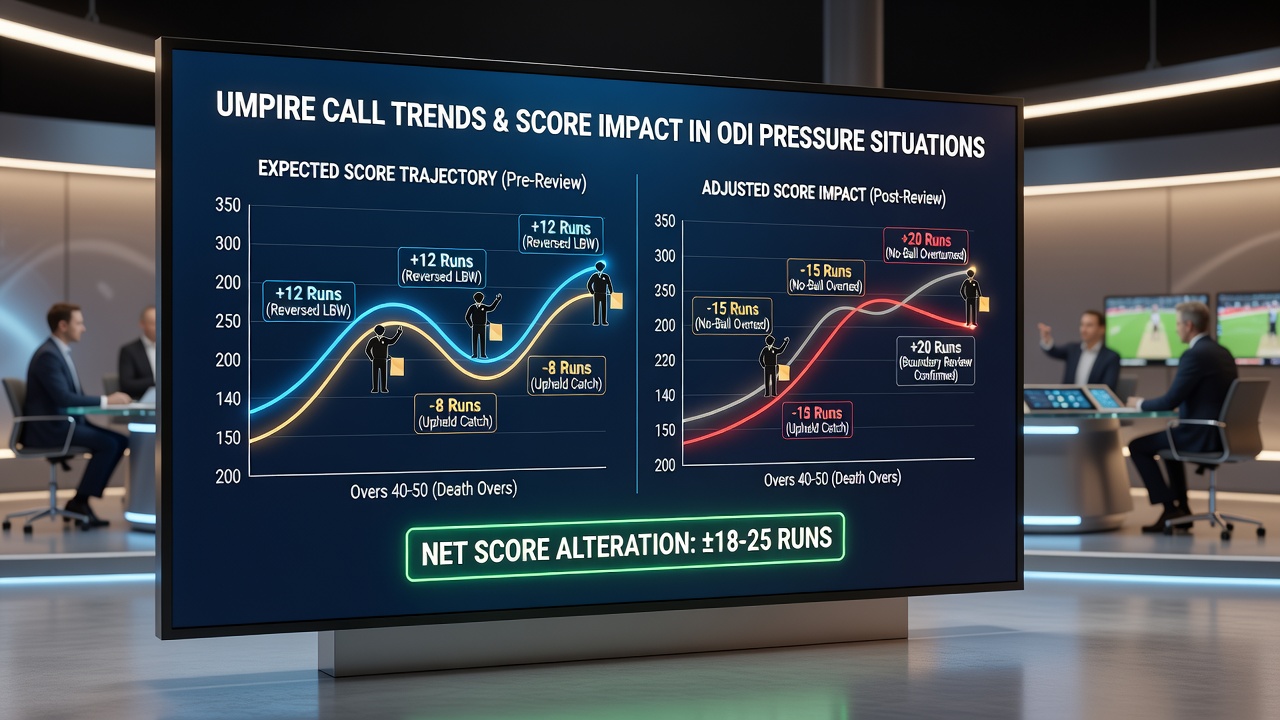
Cricket analysts apply run-expectancy models that factor in wickets lost, overs remaining, and current run rate to forecast final totals, yet umpire calls introduce variance that these models adjust post-decision. When an lbw call stands in the 30th over during a chase, the projected score often falls by 15 runs or more, because the new batter faces a higher proportion of dot balls while settling. Conversely, overturned caught-behind decisions allow established batters to continue, lifting expected totals by similar margins through sustained partnerships. Studies compiled by the ICC's technical committee demonstrate that death-over no-ball calls, which grant free hits, boost scoring rates by an average of 1.8 runs per over when they occur with fewer than six wickets down.
Regional Variations and Series Data
Matches played in Asia tend to feature more spin-related lbw reviews in pressure phases, whereas contests in Australia and South Africa generate higher volumes of edge calls due to seam movement. Data aggregated across 2025 and 2026 bilateral series shows that Asian conditions produce a 9 percent higher rate of successful DRS overturns for batters facing off-spin on turning pitches, directly affecting projected run rates in the middle overs. Those who've examined venue-specific statistics observe that grounds with shorter boundaries amplify the scoring impact of any call that preserves a set batter, because boundaries become more accessible once partnerships stabilize.
Case Examples from Recent Tours
One series between India and England in early 2026 featured multiple marginal lbw decisions in the 32nd over of chases, each reducing the batting side's projected total by double digits according to post-match modeling. Another encounter in the Caribbean saw a sequence of no-ball calls in the 47th over inflate an expected total by 22 runs after free hits produced consecutive boundaries. Such instances illustrate how individual calls compound when they cluster within narrow windows, and analysts track these clusters to refine forecasting tools used by teams and broadcasters alike.
Technological Influences on Decision Trends
UltraEdge and ball-tracking systems now provide frame-by-frame clarity that changes how umpires handle close calls, leading to fewer sustained errors in pressure situations. Reports from the ICC's 2026 technology review note that improved sensor calibration has reduced the average time for reviews while increasing the precision of impact and pitching data, which in turn narrows the variance in expected score adjustments. Teams incorporate these refined probabilities into tactical planning, adjusting field placements and bowling changes based on historical call distributions rather than gut feel alone.
Conclusion
Umpire call trends continue to exert measurable influence on expected scoring outcomes in ODI pressure situations, with data sets from international bodies and venue analytics confirming consistent patterns across regions and conditions. Continued refinement of review technologies and accumulating match records allow observers to quantify these effects more accurately, supporting better preparation for both batting and bowling units in future limited-overs contests.